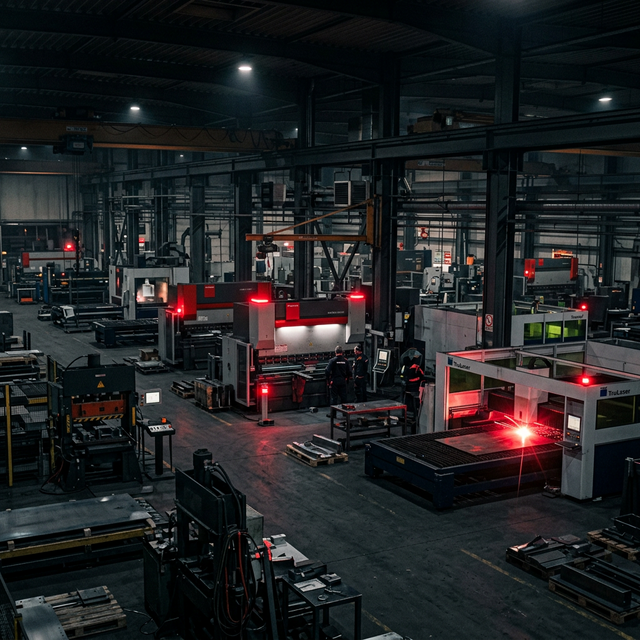
Precision
Sheet Metal Design
High-end engineering solutions for complex sheet metal components. From conceptual DFM to functional prototyping with extreme tolerances.
Core Capabilities
Design for Manufacturing (DFM)
Design for Manufacturability analysis to reduce production costs, material waste, and lead times without compromising structural integrity.
- Bend Allowance calculation
- Flat Pattern development
- Tolerance Stack-up Analysis
Precision Drafting
High-fidelity SolidWorks & Inventor modeling tailored specifically for sheet metal workflows, ensuring accurate translation into shop execution.
- Detailed 3D Part & Assembly Modeling
- 2D Manufacturing Drawings
- 3D to 2D conversion
Sheet Metal Enclosures
Specialized drafting for custom hardware environments. Accelerated development cycles from conceptual drawing to physical prototype.
- Custom Enclosure Design
- Component Nesting Integration
- Prototype Design & Support
How It Works
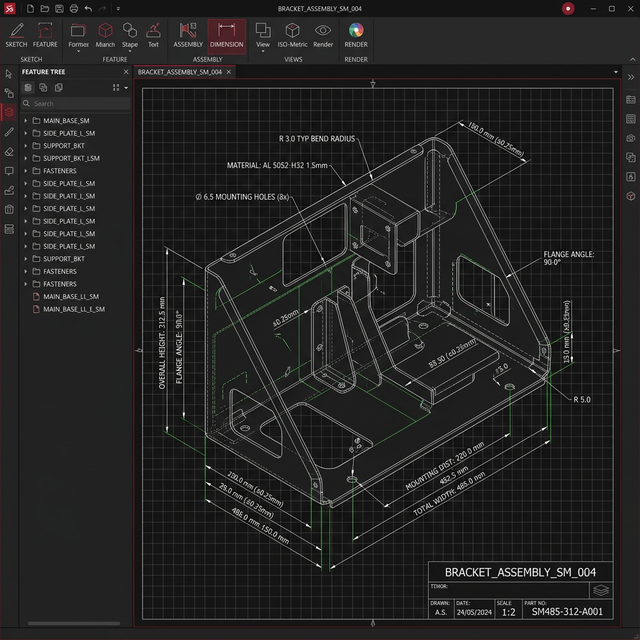
"Watch our DFM process in action: From CAD model to Flat Pattern."
Our Methodology
Design Review
Comprehensive DFM analysis and tolerance stack-up validation.
Prototyping
Rapid iteration with precise flat pattern generation and bend testing.
Final Production
High-volume fabrication executing under certified ISO 9001 quality controls.
Frequently Asked Questions
What is the standard tolerance for sheet metal design?
How does bend allowance affect manufacturing costs?
Which materials are best for outdoor enclosures?
Ready to start your
next project?
Connect with our engineering team today for a comprehensive technical review and competitive quote.
Contact Us Today